
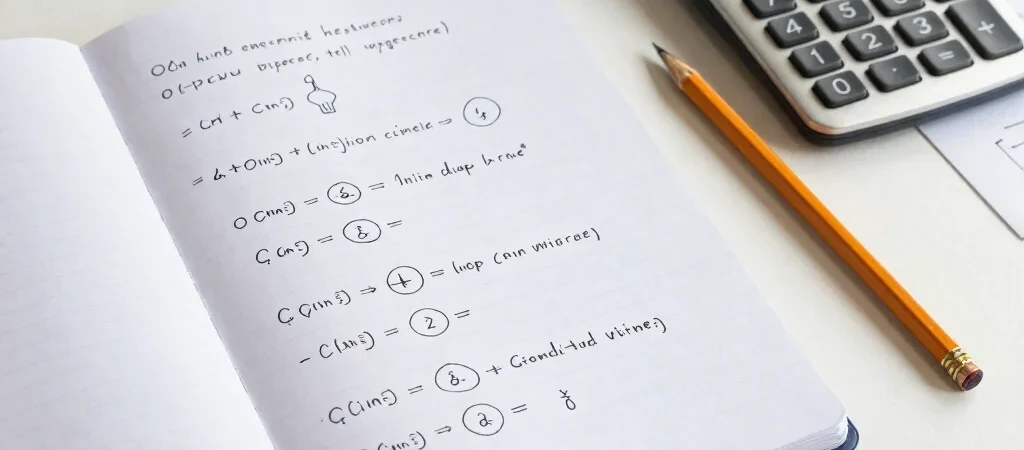
In chemistry, recognizing a formula is not the same as knowing how to use it. A stoichiometry problem can look intimidating until you identify what quantity you have, what quantity you need, and how the balanced equation connects them. I try to make that setup visible before doing the arithmetic.
Name the Given and the Goal
Read the question once for context, then mark the starting quantity and the quantity it asks for. Write each with its unit, such as grams, moles, or liters, and note the substances involved. This makes it easier to spot whether a mole ratio or a conversion is needed rather than grabbing a formula because it appeared in the same chapter.
Let Units Show the Path
For a mass-to-mass stoichiometry question, the route often involves converting the given mass to moles, using the balanced equation’s mole ratio, and converting to the requested mass. Write the units alongside each factor so they cancel as you go. If the units do not lead toward the requested answer, stop and check the setup before calculating.
Use Errors as Review Clues
After solving, compare your work with your notes or a worked example and find the first step where your reasoning diverged. Was the equation balanced, did the ratio match the substances, and did the units cancel as intended? Record that specific error in a short review note, then try a different problem without looking at the solution first.